 Skip to content



Article Summary:
Understanding the distinction between flat- and circular-shaped knitted structures is crucial to professionals involved in apparel design, textile procurement, and manufacturing.
The primary difference between flat knitting and circular knitting is the way they form loops, the configuration of the machine, the geometry of the fabric, and the performance of the end. These structural differences have an effect on the fit, elasticity, construction of seams, surface design, and efficiency of production.
Based on the authoritative textile literature, this article discusses the specifics of both flat knit and circular knit, with a particular focus on the flat back knit sweater, which is an apparel category that benefits from the unique properties of flat knitting.
Introduction: Why flat knit vs circular knit matters in modern apparel
The query “What’s the distinction between flat knit and circular knit?” is overly complex regarding a simple textile investigation. In the apparel industry, knit structure decisions affect fit accuracy, production cost, durability, surface aesthetics, and consumer comfort. As the popularity of knitwear has continued to grow in both casual and formal wear markets, understanding the two different methods of knitting has become crucial to both designers and marketers.
What is flat knitting?
Flat knitting is a form of knitting that produces fabric in both forward and backward directions on a flat bed machine. Needles are laid out in a straight line, and the fabric is formed by alternately connecting up and down directions of knitting.
Flat knitting machines typically produce panels that are open on the side rather than continuous tubes. These panels are later altered, connected, or completely fashioned into clothing.
Flat knitting’s primary attributes are described as follows.
The fabric is composed of multiple strands that are gathered into one row (not a full circle).
Produces flat panels.
Allowed precise control of the stitch and shape.
Perfect for any finished garments.
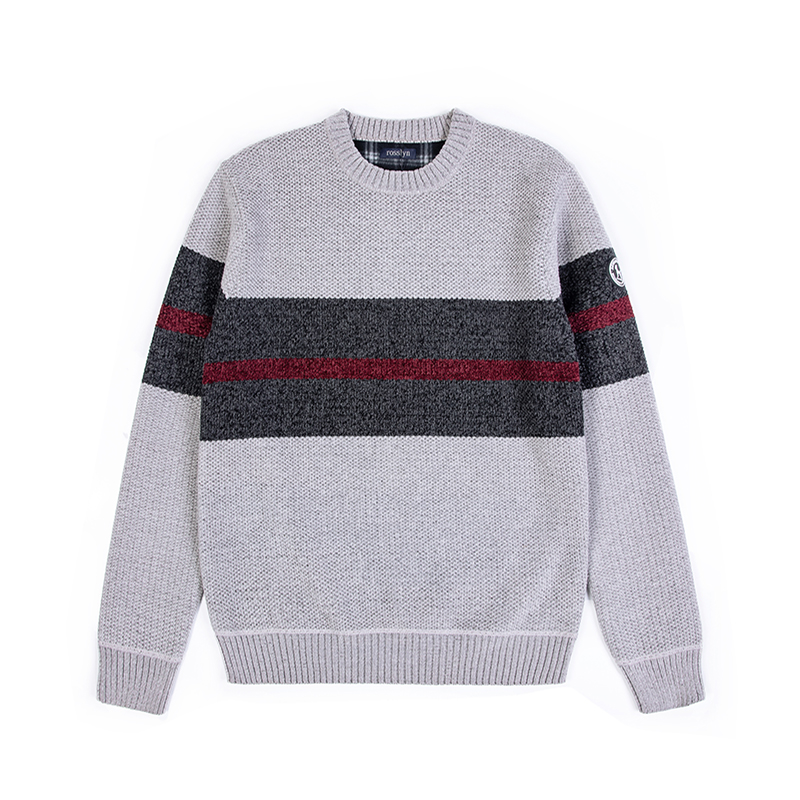
Flat knitting is typically employed in the design of flat back knit sweaters because it facilitates the direct incorporation of structure, texture, and fit into the fabric.

What is circular knitting?
Circular knitting is the process of creating fabric using a circular design, which creates a continuous fabric production. The fabric is produced with a tubular shape unless it’s opened.
Circular knitting machines are associated with high productivity and efficiency; they are commonly used in the production of large quantities of knitted fabric, such as jersey, rib, and interlock.
Main attributes of circular knitting
The fabric is formed by a continuous loop.
High production volume
Few restrictions on how to shape during the knitting process.
Common to T-shirts, pants, and basic fabric types
Core structural difference: flat vs tubular fabric formation
The primary difference between flat knit and circular knit is the design of the fabric.
Flat knitting produces two-dimensional panels, while circular knitting produces three-dimensional tubes. This distinction affects every downstream component, from the design of garments to the comfort they provide.
In sweaters with flat design, the flat geometry allows the back panel to maintain a clean appearance and control over tension; these attributes are difficult to achieve with circular knitting.
Stitch formation and loop orientation
-
Constant behavior with flat knits
In flat knitting, loops are formed that alternate between the left and right sides, and the right and left sides. This produces:
Stitch pattern that is balanced in terms of length and width.
Symmetrical stress distribution
Cleaner natural borders
-
The circular behavior of knitted loops
In circular knitting, loops are always created in the same direction. This can lead to:
Directional force
The curling edge when the fabric is divided
Increased stretchiness
These differences facilitate an explanation of why apparel that is flat in design is typically more stable in terms of dimensions.
Machine configuration and production flexibility
-
Flat-Knit Machines
Flat knitting machines have a flat needle bed that produces fabric in both directions by default. They’re typically programmed with computers and have a high degree of customizability, which allows for frequent pattern changes and precise control over the stitch pattern. Flat knit machines have a simple mechanism that can transition between different styles, gauges, and yarn types. This makes them highly versatile for small quantities, customization, and complex design.
-
Circle-Knit Machines
Circular knitting machines utilize needles that are arranged in a circular cylinder, which produces fabric in a continuous string. This configuration is dedicated to high-speed, high-volume production. While circular machines have a high efficiency and consistent fabric quality, their flexibility is limited to design changes or short productions.
Main Difference:
Flat knit: maximum flexibility, lower productivity
Circle knit: High efficiency, lower flexibility
Shaping and garment engineering capabilities
-
Flat Cropping
Flat knitting is exceptional in the design and creation of formalwear. Methods like full-fashioned knitting, stitch transfer, and variable stitch density are employed to create panels or entire garments with defined edges, structural integration, and minimal waste. This causes the flat stitch to be beneficial for:
Sweaters with pre-designed armholes and necklines.
Disasters that reduce the seams or have no seams at all
Technical and performance apparel
-
Circle Knit
Circular knitting typically produces fabric that is tubular and requires cutting and sewing to create different shapes of garments. While modern circular knitting can allow for limited alteration through different stitches, true garment design is limited. As such, the accuracy of shape and the complexity of design are lower in comparison to flat knitting.
Main Difference:
Flat knit: advanced design, high-end garment creation expertise
Circle cut: Limited alteration, it’s more dependent on following the cut and sewing.
Seams, linking, and finishing differences
-
Flat Cropping
Flat knitted clothing is typically composed of individual panels or complete garments. These panels are connected by using a seaming method that precisely aligns the stitches at the seams. Linking has the following effects:
Clean, flat seams
Low amounts of bulk at the joining points.
Increased comfort, especially at the shoulder and elbow locations
However, linking is time-consuming and increases the production time and expense. The quality of the finished product in flat-faced clothing is typically greater, which makes it appropriate for high-end and technical-oriented knitwear.
-
Circle Knit
Circular knitted fabrics are manufactured in continuous sheets, which diminishes the necessity of side seams. When seams are necessary, they are typically created through sew-and-cut methods. This results in:
Increased production speed
More or less complex seams
Increased reliance on post-harvest processing steps
Circular knit sewing is more concerned with efficiency and consistency than with exactness at the sewing points.
Main Difference:
Flat knit: Precise association, superior stitch quality
Circle: Fewer seams, quicker completion, lower cost of labor

Fabric weight, density, and surface appearance
-
Flat Cropping
Flat knitted fabrics typically have:
Increasing the fabric’s density
Enhancement in the definition of stitching
A more organized, linear surface.
The process of knitting allows for a controlled generation of stitches, which enables heavier or designed fabrics that have a consistent appearance. Flat-knit is often employed in sweaters, outerwear, and high-end garments that require fabric consistency and aesthetics.
-
Circle Knit
Circular knitted fabrics are typically:
Less expensive
Wiser and more yielding
More refined in surface quality
Because of the constant stitching and higher machine speeds, circular knit fabric is ideal for t-shirts, underwear, base layers, and sportswear; the fabric’s comfort and breathability are paramount.
Main Difference:
Flat knit: organized, compact, and superior presentation
Circular fabric: Smooth, flexible, and lightweight appearance
Elasticity and recovery behavior
-
Flat Cropping
Flat fabric that is knitted provides a controlled amount of elasticity, with the stretch built into the fabric’s design instead of being inherent to the fabric’s looseness. Recover is typically:
Stable
Predictable
Less likely to be flawed
This causes flat-knit to be appropriate for clothing that must maintain its shape over time, such as tailored sweaters and athletic apparel.
-
Circle Knit
Circular fabric’s natural stretchiness is higher, this is especially in the width direction, because of its loop design and consistent creation. However:
Stretch is more favorable
The process of recovery is less direct
The fabric may become damaged over time due to long-term stress.
Circular knit is beneficial for applications that require flexibility, but shape retention is of paramount importance.
Main Difference:
Flat knit: enhanced shape retention, controlled stretch
Circular fabric: Increased stretch, more malleable recovery
Comfort and wear performance
-
Flat Cropping
Flat knit clothing is designed with precise control of the stitch and has a shaped design that enhances long-term comfort. Key attributes of comfort include:
Less bulk in the seam due to the linking process
Increased accuracy of placement at the Shoulder, Neckline, and Armhole.
Better shape retention during long-term use
Flat knit sweaters have an original shape that will maintain its shape over time. This is beneficial after washing or using multiple times. This is beneficial to the flat-knit style, which is particularly suited for pre-designed or semi-tailored clothing.
-
Circle Knit
Circular knitted fabric is associated with a soft hand feel and high stretchiness. Benefits include:
Stretching out naturally for the greatest degree of ease.
Lightweight design
The least amount of pressure is exerted on the seams in tubular clothing.
However, circular knitted clothing may have a greater increase in size over time; this is particularly true of areas that are subject to constant stress.
Main Difference:
Flat knit: Provides long-term wear comfort and stability
Circle knit: immediate softness and malleability
Production efficiency and cost considerations
-
Flat Cropping
Flat knitting involves:
Lower machine rates
More intricate programming
Extra procedures like linking and completing
As such, the production expenses are typically greater. However, flat knitting is responsible for the near production of the desired shape, which diminishes the amount of fabric waste and allows for advanced garment design.
-
Circle Knit
Circular knitting is exceptional:
High volume production
Constant production of fabric
Lower costs and lower labor
This causes the circular knit to be ideal for mass production and cost-sensitive markets, particularly for basic clothing.
Main Difference:
Flat knit: Increased expense, increased value, decreased waste
Circle knit: High productivity, low cost, and reproducible manufacturing
Flat back knit sweater: Why is flat knitting preferred?
Flat back knit sweaters are typically created using flat knitting technology because it possesses:
Precise rear panel configuration
Tensegrity of the fabric’s fibers
Better drape and more integral design
Flat knitting promotes the formation of uniform stitches on the rear panel, which prevents twisting or distortion. This produces:
More accurate clothing placement
Increased visual appeal
Increased comfort that is long-term
For extremely expensive sweaters, flat knitting is employed to ensure the back panel is smoothly associated with the body, which increases the perceived quality of the garment.
Industry applications and product positioning
-
Flat Knit Uses
High-end sweaters and cardigans
Technical clothing and athletic gear
Fashion-inspired or custom-made knitted products
Low volume, high personalization production
Flat knit products are considered to be of high quality, engineered clothing that is both comfortable and durable.
-
Circle-Knit Usefuls
T-shirts and common tops
Base and underwear
Sportswear and athletic wear
Large-scale retail initiatives
Circle-shaped knitted products are marketed around ease of use, affordability, and production volume.
Comparison table: flat knit vs circular knit
| Aspect | Flat Knit | Circular Knit |
| Fabric form | Flat panels | Tubular fabric |
| Shaping | Fully fashioned | Limited |
| Seams | Linked or minimal | Cut and sewn |
| Stretch control | Moderate, stable | High |
| Production speed | Slower | Faster |
| Best for | Flat back knit sweater, premium knitwear | Mass-market basics |
Frequently Asked Questions (FAQ)
Q1: What is the primary difference between flat knit and circular knit?
Flat knit creates flat panels that can shape, while circular knit creates continuous tubular fabric.
Q2: What is the reason for the higher cost of flat knit sweaters?
They necessitate slower creation, more advanced machines, and programming that is skilled, but they offer a superior fit and long durability.
Q3: Is it beneficial to have a flat-back knit sweater over a circular knit sweater?
For consistency, accurate fit, and retention of shape, flat back knitted sweaters are typically more successful.
Q4: Does circular fabric have a greater stretchiness?
Yes, circular fabric typically has a higher stretchiness.
Q5: Which method of knitting is more environmentally friendly?
Flat knitting typically produces less waste and has a longer lifespan for garments.
Conclusion: choosing between flat knit and circular knit
The distinction between flat-style and circular-style knitting is more extensive than simply the machine type. It determines how clothing items fit, feel, perform, and age. Products like the flap-back sweater, flat knitting provide a lack of control, structure, and superior quality. Other than that, circular knitting is still important for the efficient, large-scale production of everyday fabric.

 English
  French
  Chinese
  German
  Japanese
  Spanish
  Portuguese
  Russian