 Saltar para o conteúdo


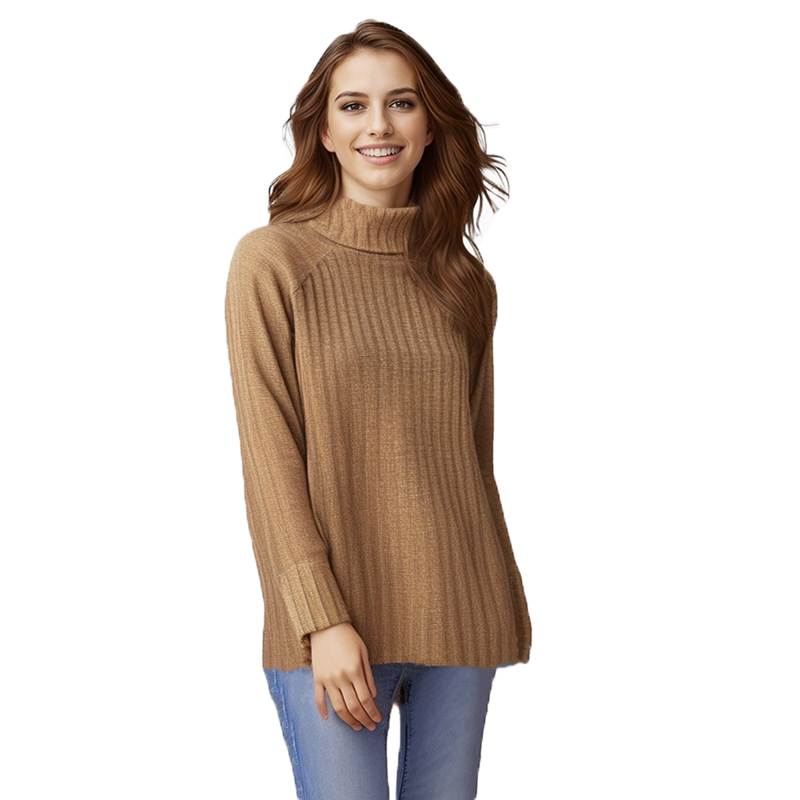

Exporting children’s clothing carries uniquely high stakes. In the global apparel market, a single safety oversight—whether a minor choking hazard, traces of toxic dyes, or failure to meet flammability benchmarks—can trigger mandatory product recalls, port-of-entry rejections, and irreversible brand damage. Brands scaling operations internationally face a complex regulatory environment. They struggle to align modern design aesthetics with strict global testing standards like CPSIA in the United States, REACH in the European Union, and AS/NZS in Australia. Navigating these mandates requires more than downstream quality control; it demands upstream engineering.
The solution lies in securing highly technical OEM/ODM manufacturing partnerships. By engaging factories that utilize verifiable safety certifications, rigorous tech pack development, and advanced manufacturing technology, brands can pre-solve compliance bottlenecks long before bulk production begins. When developing a Camisola para criança, safety cannot be an afterthought. It must act as the foundational blueprint dictating every yarn choice, stitch gauge, and trim application.
- Navigating chemical (lead/phthalates) and physical (drawstrings/trims) safety laws dictates the initial yarn sourcing and tech pack design phases of knitwear manufacturing.
- Independent certifications, primarily OEKO-TEX® Standard 100, serve as non-negotiable proof of fabric safety against harmful substances.
- Advanced knitting methodologies, such as SHIMA SEIKI’s WHOLEGARMENT® technology, mitigate physical safety risks by eliminating weak seams and friction points.
- Selecting an OEM partner requires assessing sample speed, verifiable facility auditing (BSCI, WRAP, GMP), and experience coordinating with third-party testing labs (e.g., Intertek, SGS).
The Financial and Brand Risk Profile of Children’s Knitwear Compliance
Cost of Failure: The Financial Anatomy of a Recall
Failing to meet children’s clothing regulations initiates a cascade of catastrophic financial liabilities. The anatomy of a product recall extends far beyond the lost cost of goods sold. Brands must immediately account for reverse logistics, which involves the expensive process of retrieving non-compliant garments from distribution centers, retail floors, and end consumers globally. Regulatory bodies do not offer leniency to first-time offenders. The US Consumer Product Safety Commission (CPSC) routinely levies massive civil penalties against brands that import hazardous children’s wear. Fines frequently scale into the millions of dollars depending on the volume and severity of the violation.
Beyond fines and initial shipping fees, non-compliance forces brands into expensive lab testing retries and complete supply chain audits. We can break down the hidden costs of a compliance failure into four primary impact zones:
- Reverse Logistics and Freight Penalties: Recalling goods requires emergency air freight, warehousing quarantine fees, and localized destruction protocols to ensure unsafe garments never re-enter the market.
- Government Fines and Legal Retainers: Responding to a CPSC violation requires specialized legal counsel to manage federal communications, negotiate penalty reductions, and oversee mandatory compliance plans.
- Retailer Chargebacks and Cancelled Contracts: Major retail partners refuse to carry inventory from brands that demonstrate regulatory negligence. A recall often triggers contract clauses that allow retailers to charge the brand for lost floor space revenue.
- Inventory Destruction and Warehousing Fees: Unsafe goods cannot be liquidated or donated. Brands must pay certified facilities to incinerate or permanently destroy the non-compliant inventory while paying daily holding fees at the port of entry.
Additionally, compromised vendor relationships can permanently stall seasonal rollouts. A single failed test at customs can delay an entire winter sweater collection, resulting in a complete loss of seasonal revenue.
Defining Success Criteria: Compliance as a Brand Asset
Modern apparel brands must view regulatory adherence not merely as a legal minimum, but as a core brand-building asset. A compliant children’s sweater builds consumer trust through verifiable raw material integrity and transparent supply chain traceability. When a brand implements mandatory tracking labels and relies on audited, sustainable manufacturing practices, it signals premium quality to the end consumer.
True market success is achieved when safety data becomes a marketing pillar. You can prove to parents that every fiber, dye, and trim has been clinically validated for their child’s well-being. This level of transparency converts casual buyers into lifetime brand advocates. It justifies premium retail pricing and secures buyer confidence during wholesale line reviews.
Essential Global Regulatory Lenses for Children’s Sweater Manufacturing
Physical Design Restrictions and Construction Norms
Physical hazards remain the leading cause of children’s apparel recalls globally. The US CPSC and the EU’s EN 14682 standard enforce strict guidelines regarding cords and drawstrings. Strings in the neck and hood areas of children’s upper outerwear (sizes 2T to 12) are completely prohibited due to severe strangulation risks. Waist and bottom drawstrings are heavily restricted in length. They must be permanently attached to the garment and cannot feature toggles, knots, or decorative attachments at the free ends that might catch on playground equipment or vehicle doors.
Choking hazard benchmarks are rigorously governed by the CPSC’s 16 CFR Part 1501 (Small Parts Regulation). This mandate requires that any attached trim—such as buttons, zipper pulls, snaps, and applique embellishments—must withstand rigorous mechanical tension testing. Factories must calibrate sewing machinery to ensure buttons are attached with sufficient lock-stitching to survive a minimum of 15 pounds of pull force for 10 seconds without detaching. Inspectors utilize specialized bite and pull testing gauges to simulate a child interacting with the garment, guaranteeing the component cannot be swallowed by a child under three years of age.
Chemical Phthalates, Lead, and Flammability (CPSIA & REACH)
Chemical compliance requires scrutinizing every wet process in your supply chain. Under CPSIA in the US and REACH in the EU, yarn dyes, finishing treatments, and screen-printed graphics must undergo third-party laboratory testing. CPSIA strictly limits lead in accessible substrates (like metal zippers or snaps) to 100 parts per million (ppm). Lead in paint or surface coatings is capped at 90 ppm. Phthalates, commonly found in plasticized prints or zipper plastics, are restricted to no more than 0.1%.
Flammability testing is equally critical for knitwear imports. The 16 CFR Part 1610 standard dictates Class 1 flammability requirements for knitted textiles, ensuring garments do not exhibit rapid and intense burning when exposed to an open flame. Testers place the fabric at a 45-degree angle and apply a flame for one second; the burn time must exceed 3.5 seconds to pass. However, the regulation provides specific exemptions based on yarn fiber weights and types. Garments constructed entirely from specific synthetic or natural fibers, such as 100% acrylic, nylon, polyester, or wool, consistently pass Class 1 standards. These specific compositions are generally exempt from batch-by-batch flammability testing, whereas lightweight cotton knits require rigorous verification.
Mandatory Traceability: The Role of CPSIA Tracking Labels
Traceability ensures that if a manufacturing defect occurs, you can isolate the affected batch immediately. It is a strict federal requirement under CPSIA that all children’s products exported to the United States feature a permanent tracking label. This label must remain legible for the lifespan of the garment and cannot be easily removed or washed away by the consumer.
To ensure rapid response in the event of a quality deviation, tracking labels must include specific, unalterable data points. Manufacturers must clearly print the location of production (city and country), the exact date of production, a unique cohort or batch number, and the determining source (a registered brand RN number or factory identifier). If a specific dye lot of yarn fails a post-market test, this label allows both the brand and the CPSC to execute pinpoint recalls. Instead of destroying an entire season’s inventory across multiple factories, you only recall the specific batch produced during that timeframe.
Fabric Safety Benchmarks: The OEKO-TEX® 100 Mandate
While government regulations like CPSIA and REACH establish the legal floor, baseline regulations often fall short of modern consumer expectations. Today’s parents expect garments free from allergens, heavy metals, and skin-irritating chemicals that might not yet be federally banned. Government standards often react to hazards, while independent standards proactively test for them.
OEKO-TEX® Standard 100 serves as the foundational industry baseline for infants and children. It guarantees the absence of hundreds of toxic chemicals from the raw yarn phase to the finished garment. For children’s wear (Product Class 1), the testing criteria are exceptionally strict due to the high sensitivity of baby skin and the likelihood of infants putting fabrics in their mouths. Testers use artificial saliva and sweat solutions to ensure heavy metals do not leach out of dyed yarns. Premium OEM factories provide OEKO-TEX® certified yarns by default. They treat this independent certification as a non-negotiable standard for export-ready knitwear, completely removing the guesswork from raw material sourcing.
Engineering Safety into the Tech Pack and Production Methodology
Embedding Compliance in Initial Tech Packs
Safety cannot be retroactively applied to a garment after it leaves the knitting machine. It must be codified before a single stitch is programmed. The product development phase is where compliance is permanently locked in via the tech pack. A highly technical spec sheet must detail specific seam tolerances, specify OEKO-TEX® certified dye codes, and outline non-toxic trim specifications with granular precision.
Designers must collaborate closely with factory technicians to call out testing standards directly on the bill of materials (BOM). For example, the tech pack should explicitly state the required pull-force tension for button attachments. It must specify the exact heavy-metal-free zippers to be sourced, listing the supplier by name. This strict documentation ensures no unapproved, cheaper substitutions occur on the factory floor when the purchasing department orders raw materials for bulk production.
Structural Weaknesses in Traditional Knitting
Traditional cut-and-sew knitwear manufacturing introduces inherent physical safety risks. When operators knit panels separately and link them together, the resulting seams become points of mechanical weakness. Common manufacturing defects include unraveling stitches, missed linkings, and poorly graded seams that cause severe friction against an infant’s skin. A dropped stitch during the linking process can cause the entire neckline to unravel, creating a hazardous loop of loose yarn that poses a strangulation risk to a toddler.
Additionally, manual trim fastening in traditional setups is highly dependent on operator skill. A tired operator working at the end of a long shift might fail to secure a button with the necessary lockstitches. This oversight directly leads to a physical safety failure during CPSC small parts testing. Relying entirely on manual construction significantly elevates your brand’s risk of non-compliance.
De-Risking Construction with WHOLEGARMENT® Technology
To fundamentally de-risk the manufacturing process, top-tier OEMs deploy advanced machinery such as SHIMA SEIKI’s WHOLEGARMENT® technology. This acts as a profound strategic safety advantage for exporting brands seeking zero-defect production runs.
WHOLEGARMENT® engineering allows a children’s sweater to be produced in three dimensions directly from the knitting machine, entirely without seams. Using computerized needle beds, the machine knits the front, back, and sleeves simultaneously into a complete tubular structure. By eliminating the cutting and linking processes, the garment removes traditional thread failures. For infants, the absence of bulky internal seams prevents raw edge irritation on sensitive skin and eliminates stiffness that can impede natural movement. From a safety standpoint, a seamless knit is structurally superior. It ensures mechanical stability that easily passes rigorous pull and stretch tests.
| Safety & Quality Metric | Traditional Cut & Sew Knitting | WHOLEGARMENT® 3D Knitting |
|---|---|---|
| Seam Integrity | High risk of unravelling stitches and missed linkings. | No seams exist; completely eliminates thread failure risks. |
| Skin Friction (Infants) | Bulky overlock seams can cause severe skin irritation. | Smooth, continuous fabric prevents all skin chafing. |
| Estabilidade Dimensional | Varies based on the skill of the manual linking operator. | 100% digitally controlled consistency across all units. |
| Choking Hazards | Loose threads from cut edges can wrap around fingers or be swallowed. | No cut edges or loose joining yarns present in the final garment. |
Structuring Your OEM/ODM Technical Evaluation Protocol
Auditing Facility Credentials and Operational Maturity (E-E-A-T)
Selecting a manufacturing partner dictates your brand’s total risk exposure. Brands must establish an uncompromising standard for vendor credibility by auditing facility credentials before sampling begins. Require unexpired, verifiable documentation for ethical labor practices (WRAP, BSCI), manufacturing standards (GMP), and environmental sustainability mapping (HIGG Index). These certifications prove the factory operates transparently and welcomes external auditors.
Operational maturity is equally critical. Startups and scaling brands should set a strict baseline for required vendor tenure and institutional knowledge. A benchmark maturity profile looks like a factory with 30+ years of continuous operation, acting as a trusted, highly audited supplier for global retail entities. Longevity indicates a factory has survived decades of shifting global regulations, upgraded their machinery consistently, and possesses the internal QA protocols necessary to protect your brand from port rejections.
Coordinating with Independent Third-Party Testing Labs
Your factory must not operate in a vacuum. A primary evaluation metric is a factory’s established relationship with internationally recognized third-party testing bodies like Intertek, SGS, or Bureau Veritas. A factory that cannot name their preferred testing partner is a major red flag.
A proficient OEM dynamically manages the testing workflow. They proactively submit pre-production samples, dyed yarn swatches, and trim components for Children’s Product Certificate (CPC) validation. They ensure lab results are finalized and cleared before bulk yarn is dyed and mass production is initiated. This precise coordination prevents the disastrous scenario of knitting thousands of units only to discover the final dye lot contains restricted phthalates or fails a routine flammability check.
Assessing Output Consistency and Production Scale Capabilities
Product safety is only viable if it can be replicated consistently across massive production runs. Machine redundancy and fleet modernization dictate this quality control stability. Brands must formulate a benchmark requiring their partner to possess a large-scale mechanized fleet, such as hundreds of automated SHIMA SEIKI knitting machines, to maintain dimensional stability across thousands of units.
Standard volume KPIs for a tier-1 partner include the capability to manage high-volume minimums—often exceeding 50,000 units a month—without a single standard deviation in product safety. If a factory relies too heavily on manual linking or outdated, poorly calibrated machinery, the variance between unit 1 and unit 10,000 will be too wide to guarantee CPSC compliance.
Agile Prototyping vs. Bulk Production Turnaround
Scaling a brand requires balancing fast prototyping for lab safety tests against measured, disciplined mass production. An OEM must be agile enough to iterate designs for compliance testing without delaying your seasonal retail launches. Programming complex knitting machines takes immense technical skill, so the factory must have an in-house programming department.
Expect a rapid 7-day turnaround for compliance-testable custom samples. This speed allows brands to send physical prototypes to Intertek or SGS immediately for CPC validation. Once the tech pack is locked and physical testing is passed, the factory should transition smoothly into a disciplined 60-90 day lead time for full bulk production, allowing ample time for inline QA inspections.
| Production Phase | Expected Timeline | Primary Objective | Safety & Compliance Milestone |
|---|---|---|---|
| Agile Prototyping | 7 dias | Design realization and physical fit validation. | Sample sent to 3rd-party lab (SGS/Intertek) for CPC initial testing. |
| Lab Testing & Revisions | 14 – 21 Days | Validate physical/chemical integrity. | Passes 16 CFR 1501, flammability, and lead testing. Tech pack locked. |
| Bulk Production | 60 – 90 Days | Mass-scale replication of approved sample. | Application of CPSIA tracking labels; continuous inline QA auditing. |
Conclusão
Safety in a children’s sweater cannot be audited into a product post-manufacturing. True compliance must be engineered at the tech pack, yarn, and machine level through sophisticated, globally compliant facility partners. Relying on outdated manual processes or untested materials guarantees port rejections and brand-destroying liabilities.
When evaluating supply chain partners, decision-makers must prioritize vendors that combine automated consistency—specifically seam-free WHOLEGARMENT® knitting technology—with robust, multi-national compliance certifications like WRAP and OEKO-TEX® 100. Partnering with an OEM experienced in third-party lab testing ensures that safety benchmarks are cleared long before bulk yarns are dyed.
Execute the following steps to secure your export-ready children’s knitwear supply chain:
- Audit your prospective factory partner’s sampling timelines, ensuring they possess the in-house programming capacity to deliver testable prototypes within 7 days.
- Request physical proof of CPSIA tracking label capabilities on their past production runs to verify data accuracy and label durability.
- Demand a comprehensive equipment roster to verify the active presence of advanced, automated machinery (like SHIMA SEIKI) to guarantee structural safety and dimensional consistency.
- Require unexpired, verified certificates for OEKO-TEX® 100, BSCI, and WRAP before signing your initial manufacturing agreement or transferring deposit funds.
FAQ
Q: What are the primary safety standards required to import a children’s sweater to the USA?
A: Importers must comply with CPSIA and CPSC regulations. This includes 16 CFR Part 1501 to prevent choking hazards (small parts), 16 CFR Part 1610 for flammability benchmarks, and strict chemical mandates limiting lead in accessible substrates to 100 ppm and phthalates to 0.1%.
Q: What is a CPSIA tracking label, and is it required for knitwear?
A: Yes, it is a legal requirement. A CPSIA tracking label is a permanent tag required on all children’s apparel exported to the US. It must detail the manufacturer’s location, production date, specific batch or cohort number, and the determining source to enable precise product recalls.
Q: How does OEKO-TEX® certification differ from basic CPSIA chemical compliance?
A: While CPSIA primarily focuses on specific domestic mandates like lead and phthalates, OEKO-TEX® Standard 100 assesses textiles globally for hundreds of non-regulated but potentially harmful substances, ensuring garments are entirely free from skin-irritants, heavy metals, and toxic dyes.
Q: Are drawstrings completely illegal on a children’s sweater?
A: Yes, in specific areas. Both US (CPSC) and EU (EN 14682) regulations completely ban hood and neck drawstrings on upper outerwear for children in sizes 2T to 12 to eliminate strangulation risks. Waist drawstrings are allowed but heavily restricted in length.
Q: What are the quality control benefits of using WHOLEGARMENT® manufacturing for baby wear?
A: WHOLEGARMENT® technology eradicates internal seams. This prevents skin irritation on sensitive baby skin and significantly increases the mechanical stability of the garment structure, eliminating thread unraveling and ensuring it easily passes physical pull-force safety tests.
Q: How long does third-party safety testing take for prototype samples?
A: A tier-1 factory providing rapid 7-day prototype turnarounds allows brands to quickly advance to the lab stage. Third-party testing at facilities like Intertek or SGS typically takes 1 to 2 weeks to complete physical and chemical CPC validation before bulk production begins.
 Portuguese
  English
  French
  Chinese
  German
  Japanese
  Spanish
  Russian